Arrest Warrants in Alleghany County
Virginia lets a magistrate or another authorized judicial officer issue arrest process only after a sworn examination supports probable cause. Once issued, an Alleghany County warrant must identify the accused or give a reasonably certain description, state the offense, direct an arrest and appearance before the proper court, and carry the issuing officer's signature. A sworn complaint or affidavit starts that review. Where the file lives depends on the case stage. Circuit Court holds felony trials and later circuit matters, while the combined General District and JDR clerk keeps traffic, misdemeanor, preliminary, and protected family files.
Alleghany County Arrest Warrant Review
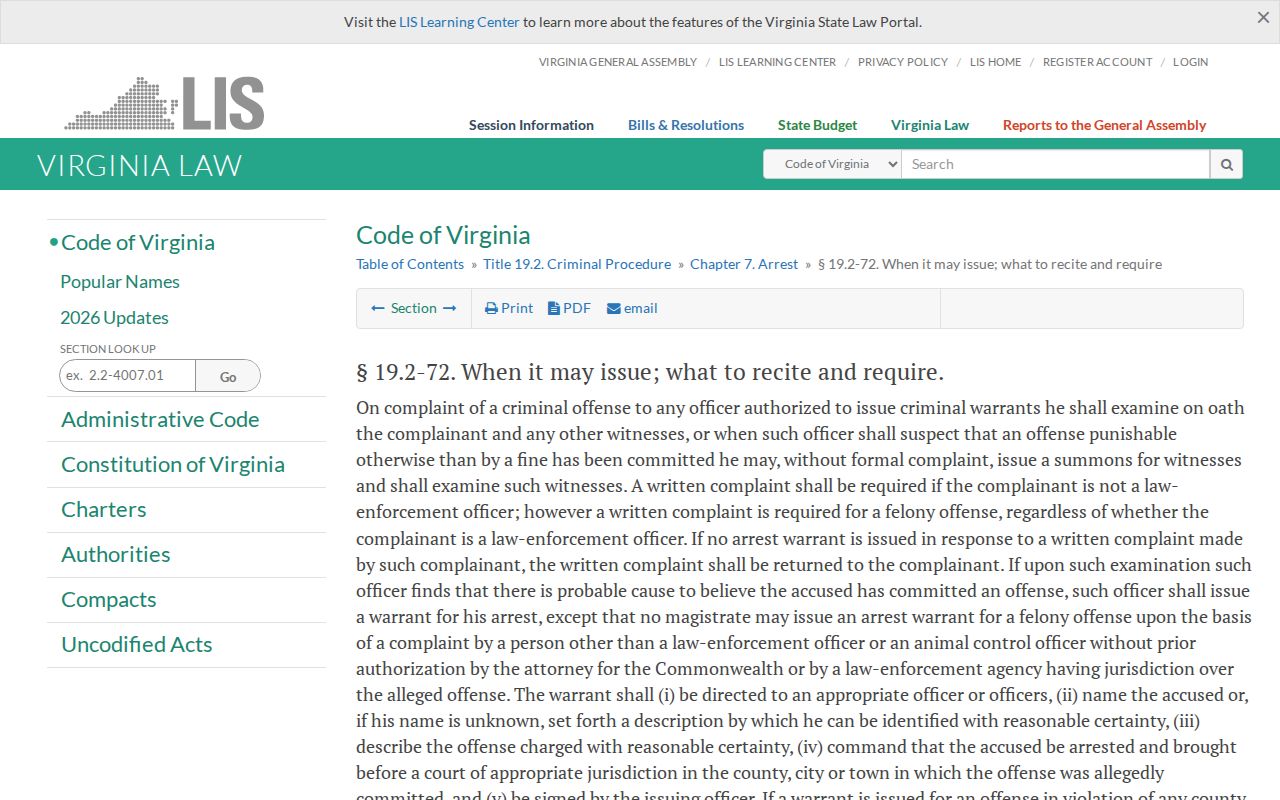
A warrant in Alleghany County does not begin with a police decision. An officer or sheriff's deputy brings a sworn complaint, and a magistrate then weighs whether the facts amount to probable cause. That division of labor matters. No local office publishes an Alleghany-specific application counter or review window, so the timing question goes to the magistrate system itself. Virginia Magistrate Services lists warrant issuance and bail hearings among its core duties statewide. If a case reaches the docket later, the clerk can give you the return court and case number. For the legal test, Virginia Code § 19.2-72 sets out the sworn-complaint and probable-cause requirements an Alleghany County warrant must meet.
What an Alleghany County Arrest Warrant Contains
A warrant document can hold authority, identity, allegation, procedure, and outcome fields. Public OCIS results show less: a handful of case details and no promise of every affidavit, bond term, or service return. No Alleghany County warrant-number format is published, so treat any numbering question as one for the clerk.
| Case / warrant number | Use the identifier printed on the court paper; no local number pattern is published. No local format published |
|---|---|
| Accused / description | Name or reasonably certain description, subject to privacy rules. |
| Charge | Offense description, Code section, and Virginia Crime Code when recorded. |
| Issuing / return court | Shows who issued process and where the arrested person must be brought. |
| Bond / recognizance | Case-specific release conditions; not a countywide fixed schedule. |
| Issue / service return | Ask the clerk or executing agency for date, officer, and return details. |
Alleghany County Arrest Warrant Record Fields
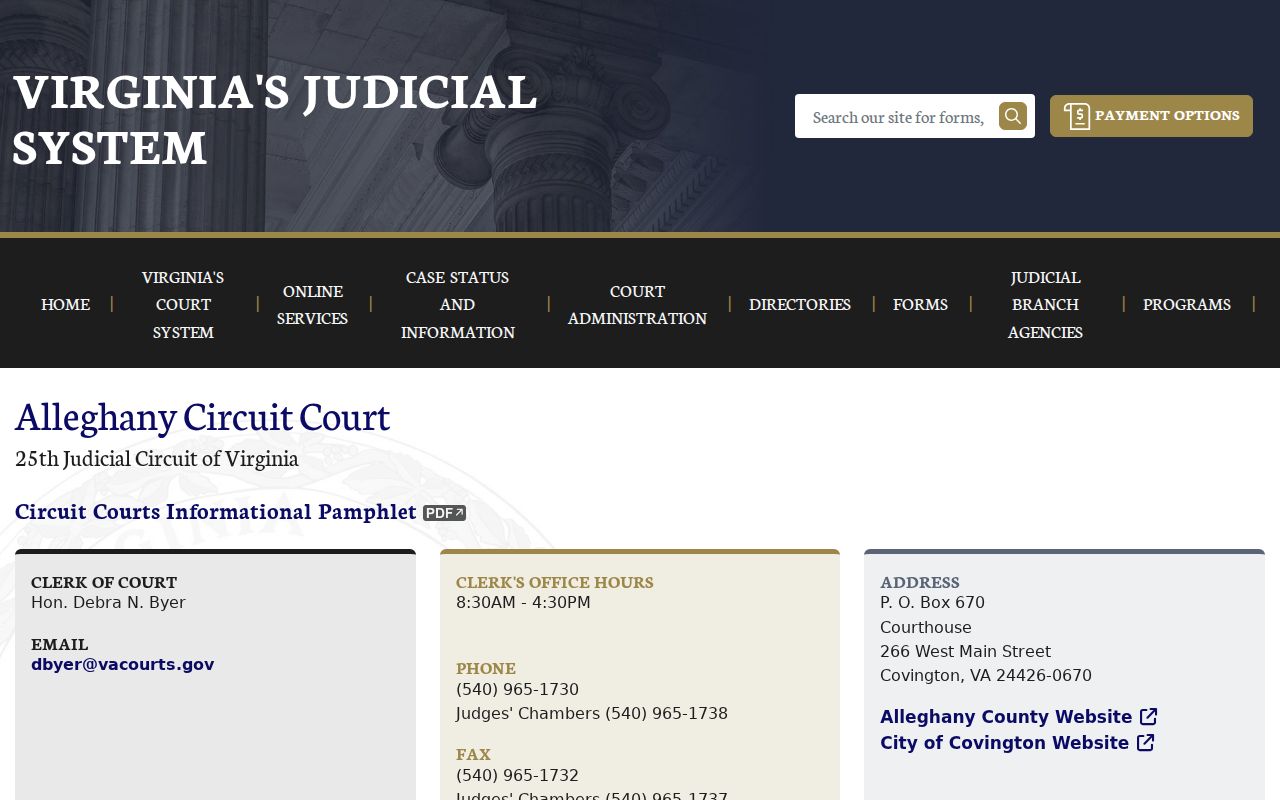
The case number ties the court record to the charge and any later hearing. The warrant itself can also name a return court and the officer directed to serve it. A public OCIS entry may list only the court, case number, offense date, hearing date, charge, and Code section. Search-warrant paperwork follows its own rule. Read Virginia Code § 19.2-54 before treating an affidavit, warrant, or return as inspectable; it sets when those papers open to the public and allows temporary sealing. That rule builds no arrest-warrant lookup, so an Alleghany County warrant search still runs through the clerk.
How Alleghany County Arrest Warrants Are Served
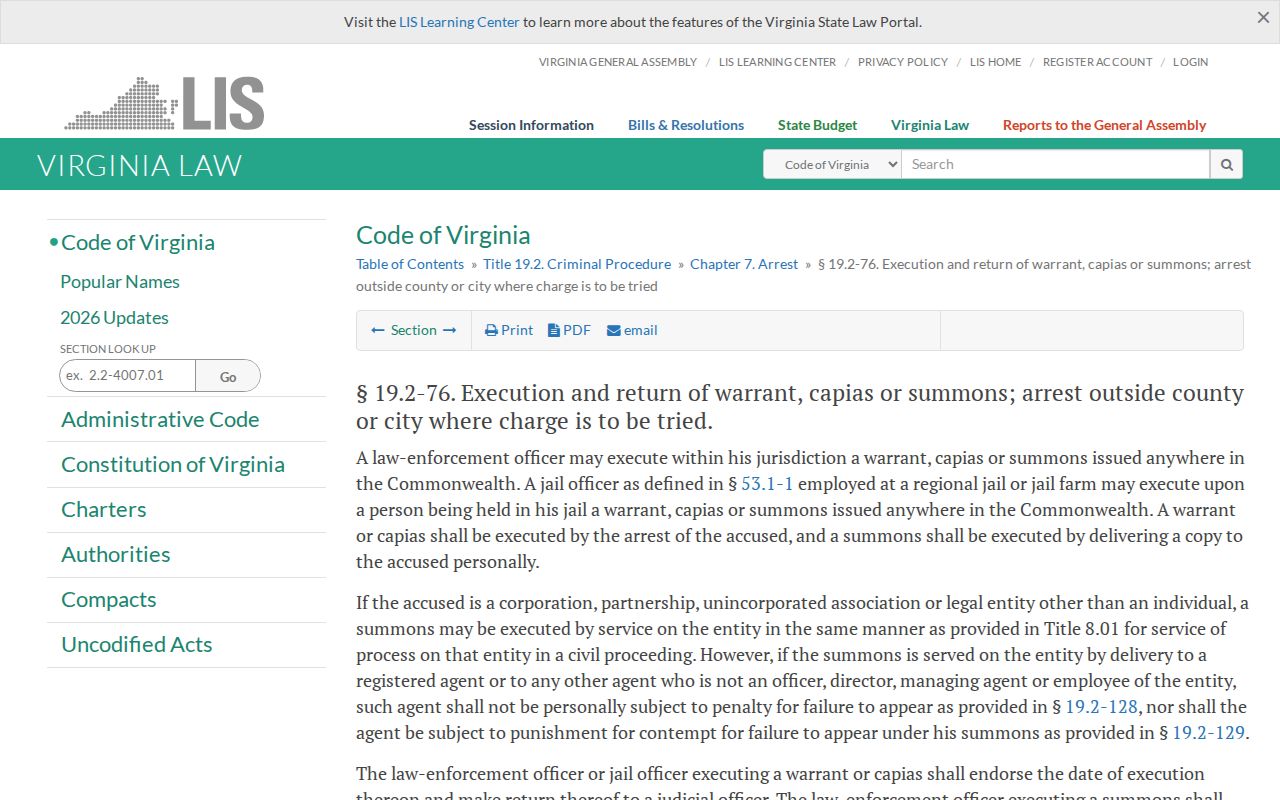
The Alleghany County Sheriff's Office serves court papers and runs the regional jail. Covington Police and Clifton Forge Police enforce local law too, and Clifton Forge's own page says its patrol division serves criminal court documents. Virginia State Police cases show up in the court schedule as well. State law lets an authorized officer execute a warrant or capias within the officer's jurisdiction and requires a return afterward. After an arrest, the person goes before a judicial officer without unnecessary delay for bail review or commitment. Virginia Code § 19.2-76 covers execution and return of process, the rule behind every served Alleghany County warrant.
Alleghany County Warrant Returns Matter
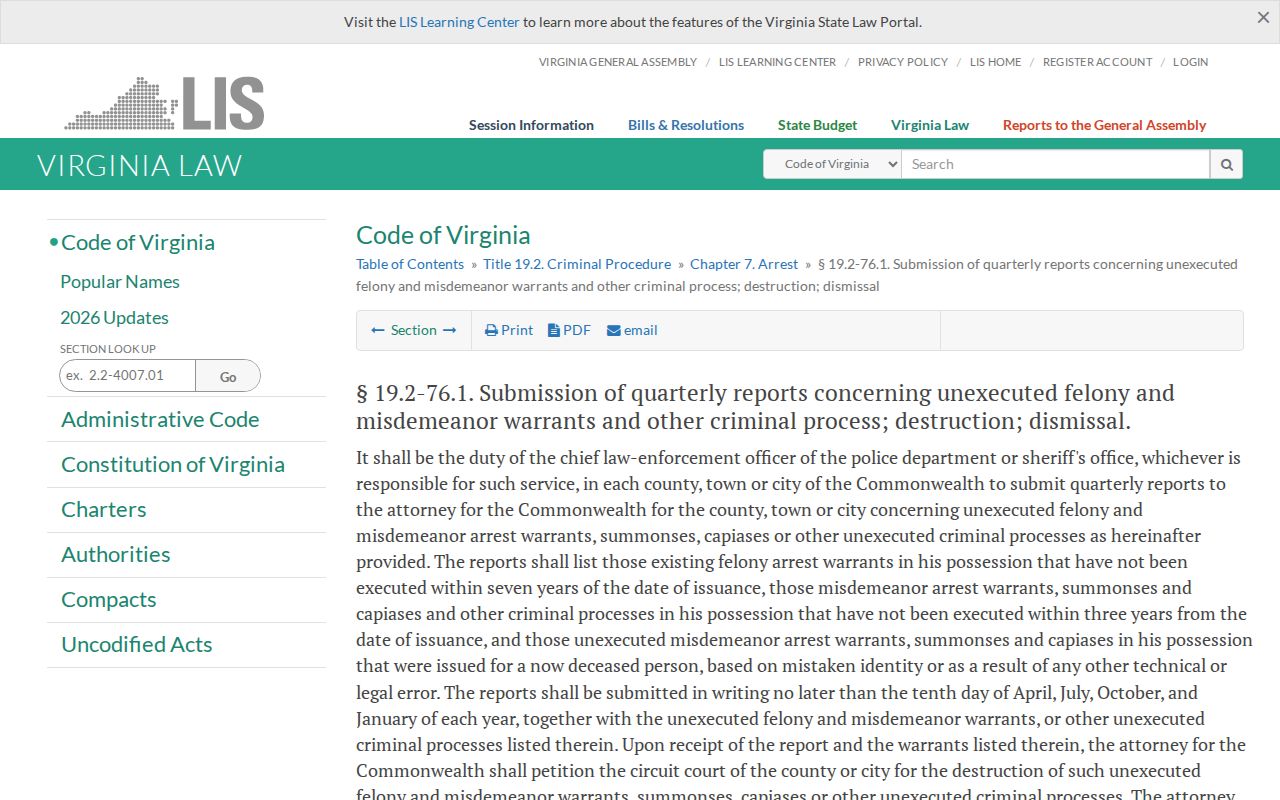
Issue, service, return, and later disposition are separate record events in any Alleghany County case. An officer who cannot find someone has not caused a recall; a judge must do that. A case outcome can even leave an old service entry on the books. So ask the clerk two things. Is the process still executable, and was the return filed? For service or custody questions, the sheriff or jail may hold the agency answer. Save any order or receipt once the court acts. Virginia Code § 19.2-76.1 addresses how aged unexecuted process is reported and handled, though it gives no reason to assume an Alleghany County warrant has expired. The text of § 19.2-76.1 supplies that statutory context.
Arrest Warrant vs Summons vs Bench Warrant
Virginia sometimes uses a summons instead of a warrant for misdemeanors. A bench or FTA warrant follows a missed court date, while a probable-cause arrest warrant starts with sworn facts. The Alleghany County bench-warrant page walks through the local missed-date route.
| Feature | Arrest Warrant | Summons | Bench Warrant |
|---|---|---|---|
| What it orders | Arrest and appearance before the proper court | Appear as directed, without immediate arrest process | Arrest or return after a court obligation |
| Basis | Probable cause of an offense | Authorized summons process | Missed appearance or noncompliance |
| Who issues | Magistrate or authorized judicial officer | Court or officer as allowed by law | Judge or issuing court |
| How to respond | Ask counsel and issuing court about process | Keep the date and follow summons instructions | Confirm recall, appearance, or payment requirements |
Alleghany County Federal Warrants Are Separate
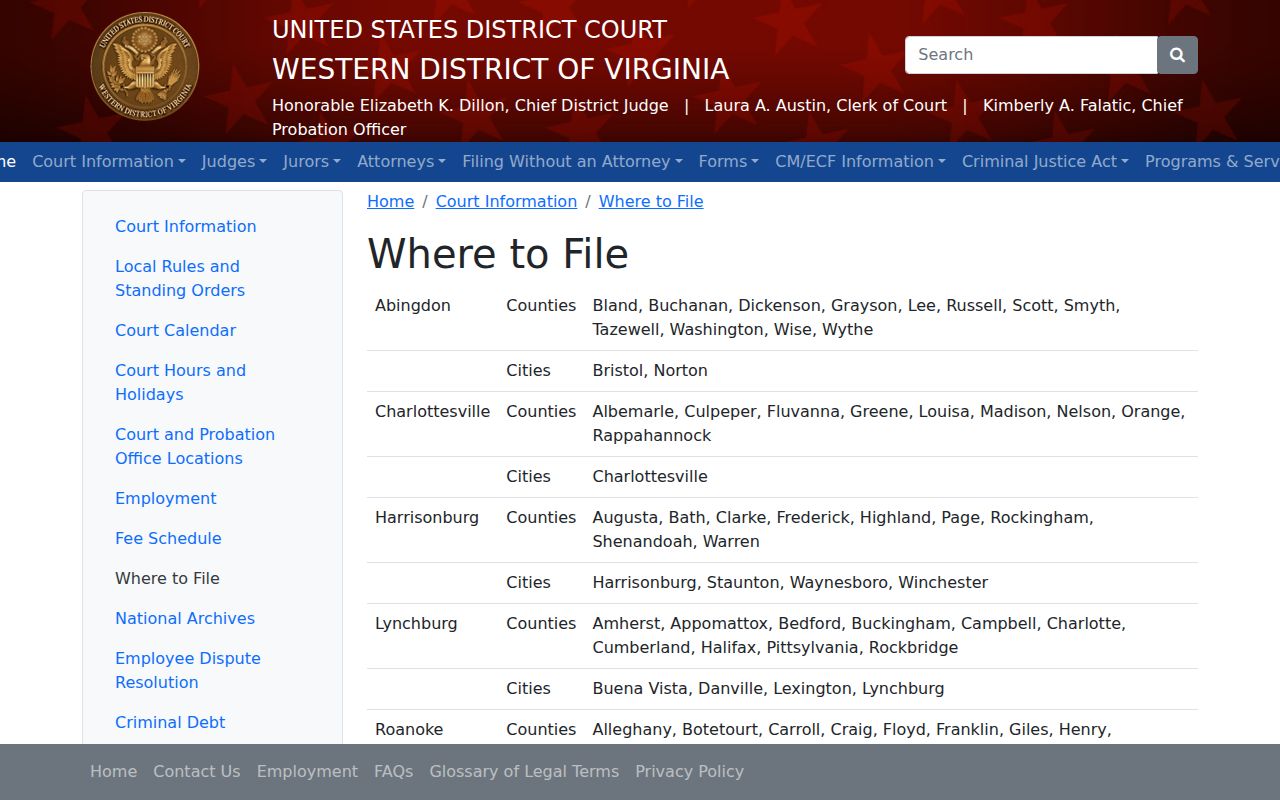
Federal process sits outside the county courts and Virginia OCIS entirely. The Western District of Virginia venue chart places Alleghany County and Covington in the Roanoke Division, and the U.S. Marshals Service handles federal warrant and fugitive work through its district structure. Keep the two worlds apart. A local clerk cannot recall a federal warrant. A county case search cannot certify federal status either. Identify the issuing court, ask counsel for the right federal contact, and keep local and federal case numbers separate. The federal venue chart and U.S. Marshals district contacts give official routing, since the federal docket runs apart from anything an Alleghany County lookup returns.
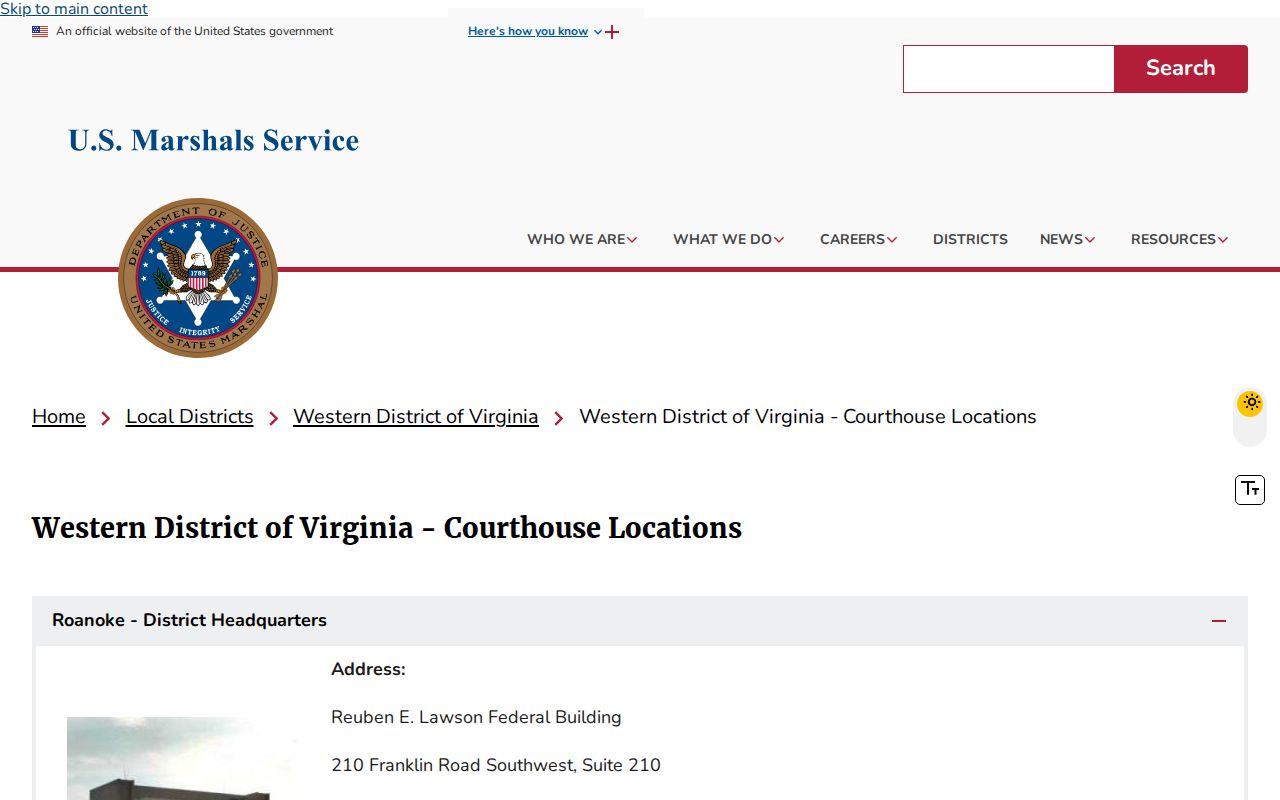
For the Roanoke Division that covers Alleghany County, the U.S. Marshals Roanoke district-office page gives the federal district contact and courthouse location.
What to Do If There's a Warrant for You
Start in OCIS. Find the case, then call the issuing clerk. Ask whether the process is still active and which Alleghany court now controls it. The next step may be a motion, a court appearance, a bond review, or a surrender arranged through counsel. Alleghany County publishes no walk-through policy and no public bond schedule, so get those answers straight from the clerk. Whatever happens, hold on to every receipt, hearing notice, bond paper, and signed recall order. A booking page can lag after an arrest. And the jail lobby kiosk? It takes inmate deposits, not warrant payments or bond.
Important: Speak with a Virginia lawyer and the issuing clerk before arranging an appearance; public pages do not promise a walk-through or same-day recall.
Alleghany County Arrest Warrant Next Steps
The combined clerk sits at 266 W. Main Street in Covington, reachable at 540-965-1720, with posted hours of 8:00 a.m. to 4:00 p.m. Circuit Clerk hours run 8:30 a.m. to 4:30 p.m., at 540-965-1730. Call before you drive over. Alleghany County publishes no surrender counter schedule, so confirm by phone that someone can receive you. For a person already held, the Alleghany County sheriff answers at 540-965-1770 and the regional jail at 540-965-1776. Virginia Code § 19.2-80 requires prompt presentation to a judicial officer after an arrest on a warrant or capias. Booking context lives on the jail's official information page. It can't pay or clear a warrant. For felony or other circuit-process questions, the Alleghany Circuit Court page is the place to look. That is the official clerk route.