Bench Warrants in Alleghany County
“Bench warrant” is common public language for court-ordered arrest process after a missed appearance or other noncompliance. Virginia forms may instead say capias, show-cause summons, misdemeanor FTA warrant, or felony FTA warrant. The issuing clerk can identify the exact record in an Alleghany County case.
Other triggers can include failure to meet release conditions, a payment agreement default, contempt, or a court order in a family matter. The court's order controls. A JDR or support record may have confidentiality limits.
Alleghany County Bench Warrant FTA Forms
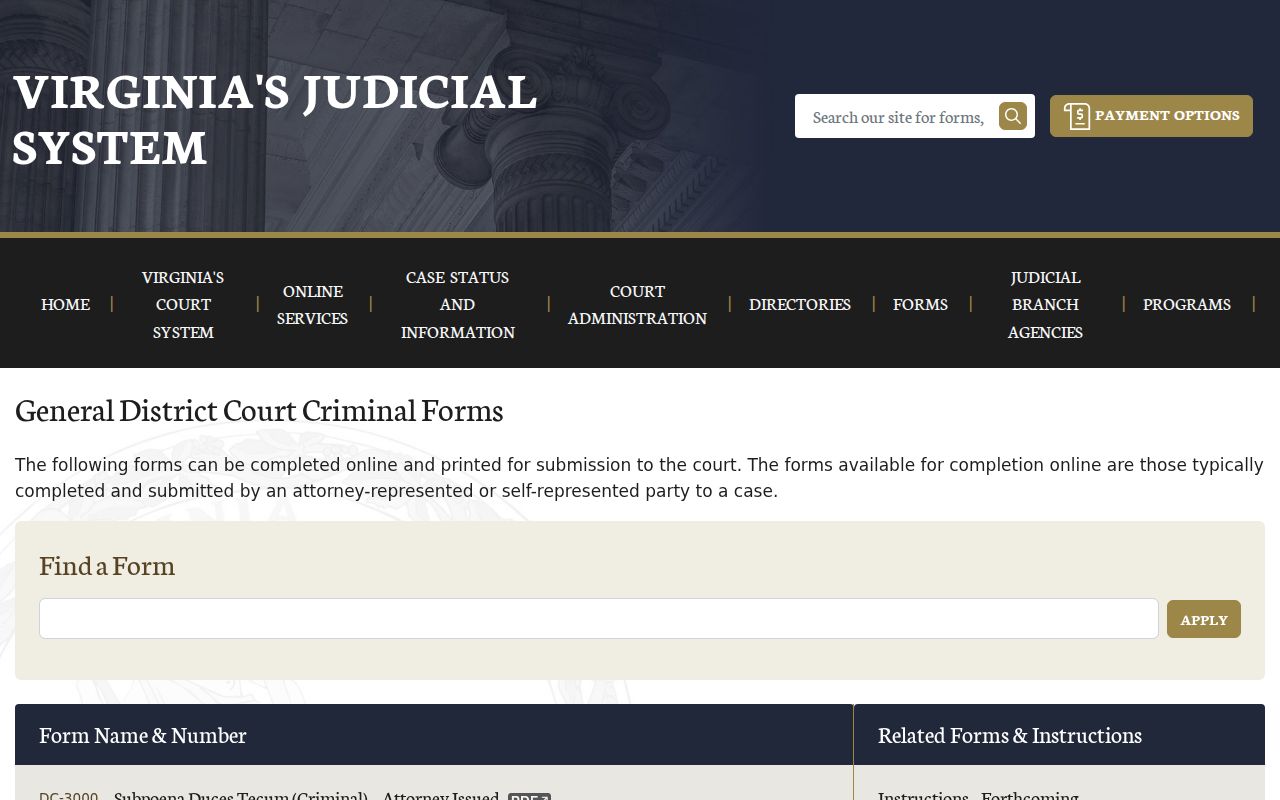
The Virginia General District Court Manual lists several possible steps after a missed trial: DC-361 capias, DC-360 criminal show-cause summons, DC-314 misdemeanor warrant, or DC-312 felony warrant. Which form applies depends on the court, charge, and order, not just the missed date.
The official forms index helps readers recognize the labels they may hear. It does not say that a person can pick a form and get a same-day recall without clerk or judge direction.
Virginia's district criminal forms index names the forms used in the court process.
How a Bench Warrant Is Issued
After a required appearance is missed, the judge may order a capias, show-cause summons, or warrant. The court record and form identify what was issued; “bench warrant” alone does not tell a reader whether the process is arrest, return, or a direction to appear.
No Alleghany grace period, warning letter, or walk-in recall session was documented. Call the issuing clerk rather than assuming a listed docket block is a warrant appointment.
Alleghany County Bench Warrant Missed-Date Questions
The combined court schedule lists agency blocks, including Clifton Forge Police and Code Enforcement on Tuesday at 1:00 p.m., and Covington Police and sheriff blocks on specified Monday and Thursday sessions. Those entries show docket flow; they do not promise a walk-in warrant hearing.
Before appearing, ask the clerk whether the case needs a motion, a new date, a show-cause appearance, or counsel. For an Alleghany Circuit case, use the Circuit Clerk. For traffic, misdemeanor, and JDR matters, use the combined clerk.
The combined court schedule is the official source for the posted docket blocks and clerk contact.
Bench Warrant vs Arrest Warrant
A bench warrant follows a court obligation; an arrest warrant starts with sworn facts and probable-cause review. Both can authorize arrest, but they arise at different points and may use different forms. The Alleghany clerk can identify which one is tied to a case.
| Feature | Bench Warrant | Arrest Warrant |
|---|---|---|
| Trigger | Missed appearance, noncompliance, or default | Sworn complaint and probable cause |
| Who issues | Judge or issuing court | Magistrate or authorized judicial officer |
| Case stage | Existing court obligation | Initial arrest process for an alleged offense |
| Next step | Confirm date, motion, payment, or recall with clerk | Confirm return court, counsel, bond, or appearance |
Alleghany County Bench Warrant Capias Terms
A capias is formal process directing a person's appearance or arrest. A capias pro fine relates to collection of court-ordered fines or costs. Do not assume that every unpaid traffic balance has produced that form.
- Capias
- Process directing attachment or arrest and return to court.
- Show-cause summons
- An order to appear and explain a default; it is not the same document as an arrest warrant.
- FTA warrant
- Failure-to-appear process, which can use different forms for misdemeanor and felony matters.
- Recall
- An order withdrawing process; ask for a filed order or clerk confirmation.
For the underlying charge and service details, compare the Alleghany County arrest-warrant process with the court's exact label.
How to Resolve a Bench Warrant
Start with the clerk for the issuing court. No Alleghany walk-in surrender hours, local bond schedule, or recall fee was found. Ask whether the next step is a payment, motion, scheduled appearance, or attorney-arranged surrender.
- Search OCIS and note the court, case number, and hearing date.
- Call the combined clerk at 540-965-1720 or the Circuit Clerk at 540-965-1730 and ask what process is active.
- Ask a Virginia lawyer whether a DC-323 recall motion, appearance, or surrender plan fits the case.
- Follow the court's payment or hearing instruction, then keep the receipt or filed order and recheck status.
Caution: A payment receipt may settle money owed without recalling process; ask the issuing clerk what the court has changed.
Alleghany County Bench Warrant Recall Is Case-Specific
Virginia's forms include DC-323 Recall of Process and DC-360 Show Cause Summons, but the public Alleghany court pages do not promise a walk-in form filing or remote recall. The clerk can say whether the judge requires a written motion, counsel, or a scheduled appearance.
For a missed date, bring the summons or case number, the date missed, payment receipts, and any record that explains the absence. Ask before emailing sensitive papers. The court decides whether a reason changes the process.
If money is owed, request an itemized balance and ask whether payment affects a separate capias. Virginia Code § 19.2-358 describes options after certain defaults, but the local order controls.
Which Alleghany County Court Issued It
The court that set the underlying case controls the next hearing and any recall. Alleghany has Circuit Court, General District Court, and JDR, with magistrates handling initial process and bail. No separate municipal court was identified in the official local court pages.
Use the Alleghany County warrant search steps to locate the case, then contact the matching clerk. The sheriff serves process but cannot replace the issuing court's order.
Alleghany General District and JDR Clerk
266 W. Main Street, Covington
540-965-1720
Alleghany County Bench Warrant Magistrate Role
Virginia magistrates review probable cause, issue certain warrants and summonses, and conduct bail hearings. A local direct magistrate number was not posted on the Alleghany court pages, so the clerk or sheriff can route a caller to the return court.
The magistrate's initial role does not mean that office can decide every later case question. The clerk holds the case file, the judge controls recall, and an executing agency records service.
Virginia Magistrate Services describes the statewide role.